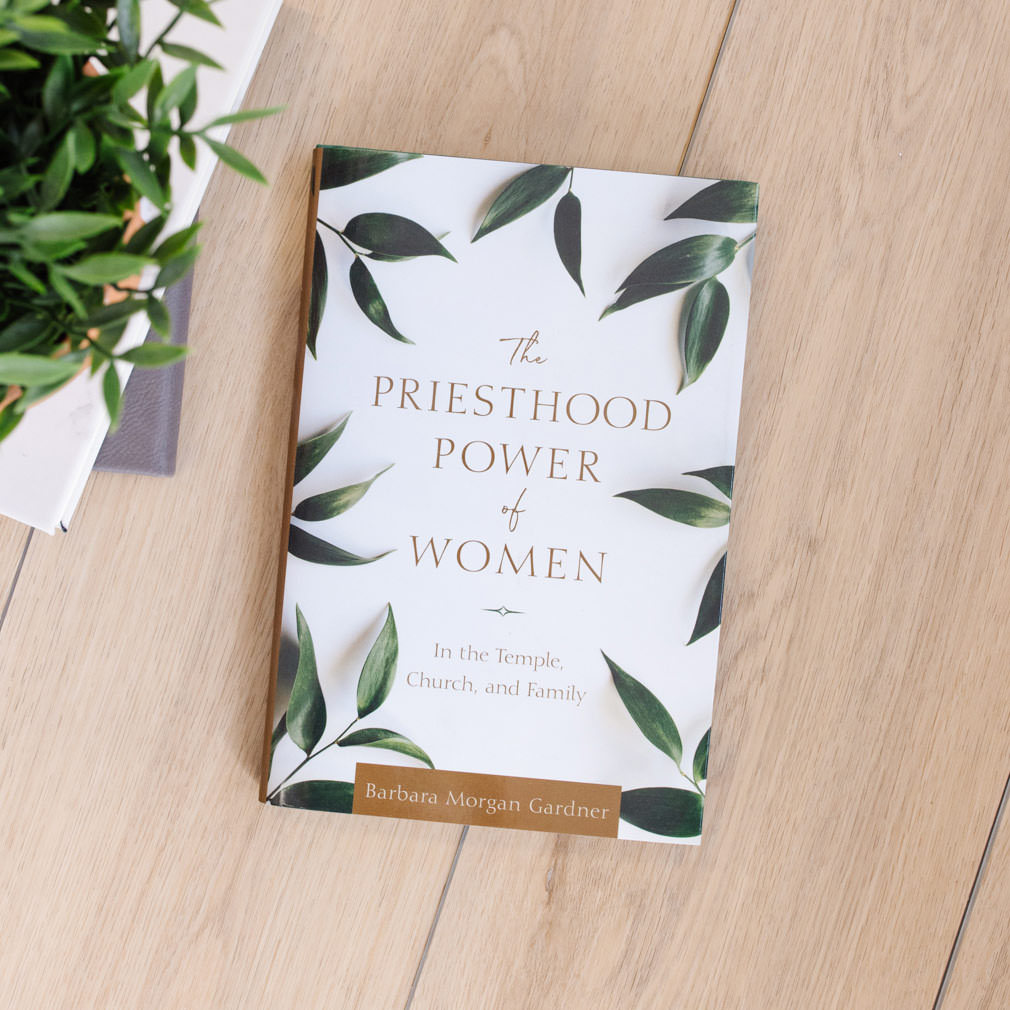
After the October 2021 conference, I wanted to focus on my temple covenants and learning more about the covenants I make in the temple. I heard about this book and instantly bought it for my Kindle. The rest of the blog post are snippets taken from the book and organized in a way to reference my favorite parts.
How will we as women use the priesthood power we have been endowed with in our homes, communities, and world if we don’t know what it is, let alone how to call upon it?
“When men and women go to the temple, they are both endowed with the same power, which by definition is priesthood power. . . . Access to the power and the blessings of the priesthood is available to all of God’s children.”
The reality that we have Heavenly Parents, that we are Their children, and that we have potential to become like Them is the core of what we as members of the Church believe.
President Nelson invited all those who have received temple ordinances to labor together to bring these blessings to all members. “For members to fall short of that objective would be like paying for a banquet and then leaving after salad has been served. The sublime feast at the banquet table of opportunity in the Church is experienced in the temple. The ordinances therein constitute the ultimate reason for our membership in the Church.”
Many Church members, not knowing what blessings they have access to and what privileges are theirs, go through mortality not taking full advantage of the spiritual feast and powers available to them. They are thus minimizing the influence they could have on others. This is especially true when it comes to women and the priesthood.
What is the Priesthood?
We use the term priesthood with the way we use the term earth. Earth can either be the entire globe upon which all of us live, or it can be the dirt that we can pick up with our hands or plant flowers in. If we think of the priesthood solely in terms of the power and authority of God delegated to man—or the dirt in the Renlunds’ analogy—we will find that we have been very narrow in our definition, leaving out much of God’s power and authority. If we think of priesthood as the power and authority of God—or the entire globe in the Renlunds’ analogy—we expand our view and include not only that which is commonly focused on but all that God defines as His power and authority.
Some see only the trunk of the elephant and call it “the priesthood,” but they are really talking only about the men who are ordained to offices in the priesthood. Although that terminology is correct, it is only partially correct. Many are so accustomed to looking only at the trunk of the elephant that they forget, or have never realized, that they are not seeing the entire elephant. They may even correct others for being misguided.
In its most holistic sense, priesthood is the power of God. The priesthood is to be used in order to help God’s children return to Him and become like Him.
What is the Purpose of the Priesthood?
The overarching and ultimate purpose of the priesthood, therefore, is to make salvation and exaltation possible for all of God’s children. Every time priesthood keys are used or a priesthood ordinance is performed, it is for the purpose of saving and exalting God’s children.
Perhaps as we recognize that the role of anyone involved in the Church is to help individuals and families gain eternal life, it is not so important who has the calling, but what each of us can do in our respective roles to make sure God’s work and glory does come to pass.
So Who Has “The Priesthood”?
Men Are No More “The Priesthood” Than Women Are As Elder Neil L. Andersen taught: “A man may open the drapes, so the warm sunlight comes into the room, but the man does not own the sun or the light or the warmth it brings.”
We need never confuse the idea of those who hold the priesthood in trust, with the priesthood. The priesthood is God’s power. It is His power to create, to bless, to lead, to serve as He does. . . Don’t confuse the power with the keys and the offices of the priesthood. God’s power is limitless and it is shared with those who make and keep covenants. Too much is said and misunderstood about what the brothers have and the sisters don’t have. This is Satan’s way of confusing both men and women so neither understands what they really have.
Priesthood is not something we are. It is God’s power that He authorizes His servants to use for the benefit of others.
How did the Power of Priesthood keys Return to the Earth?
Elijah was translated at the end of his life, allowing him to physically restore the keys of the priesthood in the future to Peter, James, and John on the Mount of Transfiguration. Because he still had a physical, tangible body, it allowed him to perform physical priesthood ordinances and confer the keys of the sealing power to Joseph Smith and Oliver Cowdry inside the Kirtland Temple Easter & Passover Sunday 1836.
How do I Receive Priesthood Power?
The doctrine of the priesthood is known only by personal revelation. It comes, line upon line and precept upon precept, by the power of the Holy Ghost to those who love and serve God with all their heart, might, mind, and strength.
President Nelson taught, “Nothing opens the heavens quite like the combination of increased purity, exact obedience, earnest seeking, daily feasting on the words of Christ in the Book of Mormon, and regular time committed to temple and family history work.”
True doctrine, understood, changes attitudes and behavior. Note in this statement that it is not only true doctrine existing, or true doctrine known, but true doctrine understood that changes attitudes and behavior. Understanding true doctrine comes from a combination of hard work and effort with the Spirit testifying of these truths.
Our divine potential—which seems blasphemous to some, but is sacred, inspiring, and true to us—is the greatest motivating factor to follow the commandments of God, make sacred covenants, keep them, and teach them to our families and the world.
The Lord offers to his daughters every spiritual gift and blessing that can be obtained by his sons.
Family Order — Patriarchal Order
The order of priesthood spoken of in the scriptures is sometimes referred to as the patriarchal order because it came down from father to son. But this order is otherwise described in modern revelation as an order of family government where a man and woman enter into a covenant with God—just as did Adam and Eve—to be sealed for eternity, to have posterity, and to do the will and work of God throughout their mortality. Thus, the same word, priesthood, refers both to God’s total power and authority and to that portion of His power and authority that He delegates to man on earth.
The government of the family is patriarchal, whereas the government of the Church is hierarchical.
The social circumstances of the nations and the governments are such today that we can’t operate through families like they did in Abraham’s day. You can’t have civil and ecclesiastical authority combined because the great masses of men don’t belong to the Church.”36 The organizational structure of the Church therefore went from patriarchal/familial to hierarchical/ecclesiastical. The doctrine of the priesthood did not change, but the application, procedures, and policies of how the Lord structured His priesthood did change, primarily in the public setting.
During Joseph Smith’s tenure as prophet, both the hierarchical and patriarchal priesthood structures were apparent. It seems as if Joseph was trying to learn from the Lord both how to structure a Church, using the hierarchical priesthood structure, and how to create Zion and prepare the members for eternal life as promised in the temple, using the patriarchal structure of the priesthood. In other words, during Joseph’s leadership, the hierarchical structure used in the public Church organization (with Apostles, prophets, seventy, and so on) and the familial or patriarchal structure used in the temple (with men and women receiving the power and authority associated with the patriarchal order of the priesthood) were not only both being used, but they were dependent upon each other. Joseph was evidently receiving revelation from the Lord regarding both priesthood structures simultaneously.
Although the Church plays a pivotal role in proclaiming, announcing, and administering the necessary ordinances of salvation and exaltation, all of that, as important as it is, is really just the scaffolding being used in an infinite and eternal construction project to build, support, and strengthen the family. And just as scaffolding is eventually taken down and put away to reveal the final completed building, so too will the mortal, administrative functions of the Church eventually fade as the eternal family comes fully into view.
“We go to the temple to make covenants, but we go home to keep the covenants that we have made. The home is the testing ground. The home is the place where we learn to be more Christlike. The home is the place where we learn to overcome selfishness and give ourselves in service to others.”
Family Partnership
There is not a president or a vice president in a family. The couple works together eternally for the good of the family. They are united together in word, in deed, and in action as they lead, guide, and direct their family unit. They are on equal footing. They plan and organize the affairs of the family jointly and unanimously as they move forward.
“There is a division of labor in marriage. The husband is an external force. His normal duty is to provide and protect. The wife is an internal force. Her normal duty is to care, nurture, and to teach. Neither husband nor wife is ‘the boss.’”
It seems that in the relationships that thrived, there was no competition between the husband and wife. Neither was “in charge” of the other—neither “wore the pants” in the relationship—but each recognized the importance of each of their divine roles and of loving and serving and being selfless together.
Both husband and wife recognize and utilize the gifts and talents of each other and love each other for the betterment of the entire family system.
As the proclamation clearly states, men and women, though spiritually equal, are entrusted with different but equally significant roles. These roles complement each other. Men are given stewardship over the sacred ordinances of the priesthood. To women, God gives stewardship over bestowing and nurturing mortal life, including providing physical bodies for God’s spirit children and guiding those children toward a knowledge of gospel truths. They set an example of respect and love for their eternal companion and mother of their children. In all things they follow the example of the Savior and strive to be worthy of His name and His blessing. Fathers should seek constantly for guidance from the Holy Ghost so they will know what to do, what to say, and also know what not to do and what not to say. They serve the family and the Church in the spirit of love and enthusiasm. This presiding, the Lord’s type of presiding, is done in love and righteousness.
“The priesthood role of fathers is to preside and pass priesthood ordinances to the next generation. The priesthood role of mothers is to influence. These are essential, complementary, and interdependent responsibilities.”
Hierarchal Priesthood Order
Partnership in priesthood authority at Church is not the same as partnership in priesthood authority at home. Although men and women must work together to effectively oversee the programs of the Church both generally and locally, each member of the Church has a specific calling for which he or she is given priesthood authority. A wife would have no more stewardship over her husband’s bishopric calling than he would have over hers if she were the ward Relief Society president and he were a Sunday School teacher. They may counsel with each other and learn from each other, but the authority for each calling belongs to the individual.
So do Women have Any Part in the Hierarchal Priesthood Power?
I believe women have a great influence on men in how they perform their callings. Our confident support and belief in them is exactly the motivation they need to rise up and become and fulfill that belief.
Elder M. Russell Ballard quoted Elder John A. Widtsoe as saying: “The Priesthood is for the benefit of all members of the Church. Men have no greater claim than women upon the blessings that issue from the Priesthood and accompany its possession.” I find it fascinating that he even adds “accompany its possession,” meaning perhaps that not only do men and women receive the blessings of the priesthood, but a man, just because he is ordained to a priesthood office, does not have blessings given to him that a righteous woman cannot have.
Priesthood authority in the hierarchical structure of the Church is received in two ways: through ordination and through being called and set apart.
“We are not accustomed to speaking of women having the authority of the priesthood in their Church callings, but what other authority can it be? When a woman—young or old—is set apart to preach the gospel as a full-time missionary, she is given priesthood authority to perform a priesthood function.”
Priesthood authority, therefore, is given to both women and men, based on their callings.
If a husband and a wife, for example, were called to be team teachers to the same Primary class, neither the husband nor the wife would preside over the other in the class. It has often been misunderstood that the phrase the priesthood presides refers to men possessing authority over women. The priesthood is not a man, and since both the man and the woman in this case have priesthood authority through one who holds priesthood keys of presidency, they both preside in the class.
It is important to teach the deacons quorum president his duties and responsibilities as one who holds keys, but it is equally important to teach the Beehive class president her duties and responsibilities as she has been called and set apart and given priesthood authority to preside over the Beehives in her class.
However much priesthood power and authority the men may possess—however much wisdom and experience they may accumulate—the safety of the family, the integrity of the doctrine, the ordinances, the covenants, indeed the future of the Church, rests equally upon the women.”
The Purpose of the Relief Society
“He said . . . he wanted to make us, as the women were in Paul’s day, ‘A kingdom of priestesses.’ We have the ceremony in our endowments as Joseph taught.” Joseph, therefore, used the Relief Society to help prepare women to enter the temple, receive their own endowments, and enter into the patriarchal order.
A Mother’s Influence
Most worldly reinforcement is visible, seemingly valued, verifiable, and often immediate. Mothering, by contrast, is often quiet, individual, gentle, frequently anonymous, selfless, and with no accolades. It is in the later years, and especially in the eternities, when we will come to understand the full worth of mothers. The leaders of the Church, and especially the Lord, already know.
Presidency Keys
“The general use of the term ‘priesthood keys’ or ‘keys of the priesthood’ can be understood as rights belonging to and available to priesthood leaders,” but the blessings and privileges flowing from them also belong to all members of the Church who are worthy of them.
- Through my continued study of priesthood keys, it has become clear to me that, just as there are various parts to the elephant when it comes to the priesthood, there are also various parts of the elephant when referring to priesthood keys.
- The keys that are typically referred to in the Church—in the most common use of the term—would better be titled priesthood keys of presidency.
- These keys of presidency “are the authority God has given to priesthood leaders to direct, control, and govern the use of His priesthood on earth” for a specific time and over a specific location.
- These include: (1) keys bestowed upon the Apostles (otherwise known as keys of succession or apostolic keys), (2) priesthood keys of presidency, and (3) general priesthood keys.
Aaronic Priesthood
- Through the Aaronic Priesthood ordinances of baptism and the sacrament, we are cleansed of our sins and promised that if we keep our covenants we will always have His Spirit to be with us. I believe that promise not only refers to the Holy Ghost but also to the ministering of angels, for “angels speak by the power of the Holy Ghost; wherefore, they speak the words of Christ”
- It is critical to not only teach the young men about what it means to hold the keys of the ministering of angels, but to also teach both the young women and young men what it means to have the ministering of angels in their lives.
Heavenly Mother & Priesthood Power
“This glorious vision of life hereafter . . . is given radiant warmth by the thought that . . . we shall find a mother who possesses the attributes of Godhood.”
“When you stand in front of your heavenly parents in those royal courts on high and you look into Her eyes and behold Her countenance, any question you ever had about the role of women in the kingdom will evaporate into the rich celestial air, because at that moment you will see standing directly in front of you, your divine nature and destiny.”
The moment a woman begins making covenants, she starts the process of becoming a matriarch. Every ordinance leads them to the fulfillment of this great patriarchal/familial order of the priesthood. Baptism, the gift of the Holy Ghost, the Melchizedek Priesthood conferred upon men, the initiatory, and the endowment all lead up to the final ordinance, the sealing ordinance. Each ordinance gives additional power, blessings, understanding, intelligence, and light to each individual. Each draws us closer, as women and men, to becoming like our Heavenly Mother and Father.
How do we Increase our Priesthood Power
“If we will humbly present ourselves before the Lord and ask Him to teach us, He will show us how to increase our access to His power.”
We develop Christlike attributes such as “faith, virtue, knowledge, temperance, patience, godliness, brotherly kindness, charity, [obedience,] and diligence,” then “the greater will be our priesthood power.” Searching the scriptures and feasting upon the words of Christ, worshipping regularly in the temple, and serving others also increase priesthood power,
“We need women . . . who understand the power and peace of the temple endowment.” As women, therefore, it is not good enough to know that the power of God exists, or even to have a testimony of it, but we must understand the doctrine of it, access it, and use by so covenanting, the couple together enters into the patriarchal/familial order of the priesthood.
“What does it mean to have access to priesthood power for our own lives?” Sister Dew asked. “It means that we can receive revelation, be blessed and aided by the ministering of angels, learn to part the veil that separates us from our Heavenly Father, be strengthened to resist temptation, be protected, and be enlightened and made smarter than we are—all without any mortal intermediary.”
Women who make and keep covenants in the temple have “the power of enlightenment, of testimony, and of understanding.”
Every woman and man born on this earth has been blessed with the light of Christ and has the ability to be influenced by the Holy Ghost. We are literally endowed with power to know and do God’s will and thwart the adversary.
President Russell M. Nelson taught: “To help another human being reach one’s celestial potential is part of the divine mission of woman. As mother, teacher, or nurturing saint, she molds living clay to the shape of her hopes. In partnership with God, her divine mission is to help spirits live and souls be lifted. This is the measure of her creation. It is ennobling, edifying, and exalting.”
“Take your rightful and needful place in your home, in your community, and in the kingdom of God—more than you ever have before.”